
Fever 101: The Paediaxis Guide to Managing Fever in Children
PARENTING GUIDE
Introduction
Fever is one of the most common reasons parents seek medical attention, yet it is often the most misunderstood. At Paediaxis, we believe in empowering parents with clinical facts, not fear. This guide, grounded in standard protocols from the Nelson Textbook of Paediatrics, will help you navigate your child's fever safely.
What is a Fever?
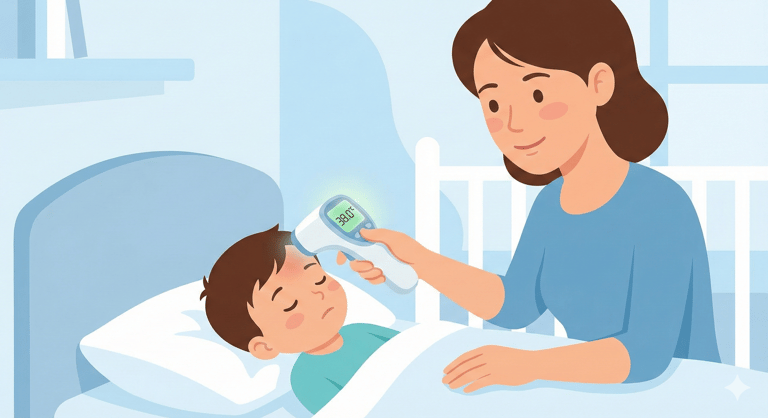
Medically, a fever is not an illness itself; it is a physiological response. It is a sign that your child’s immune system is active and fighting off an infection.
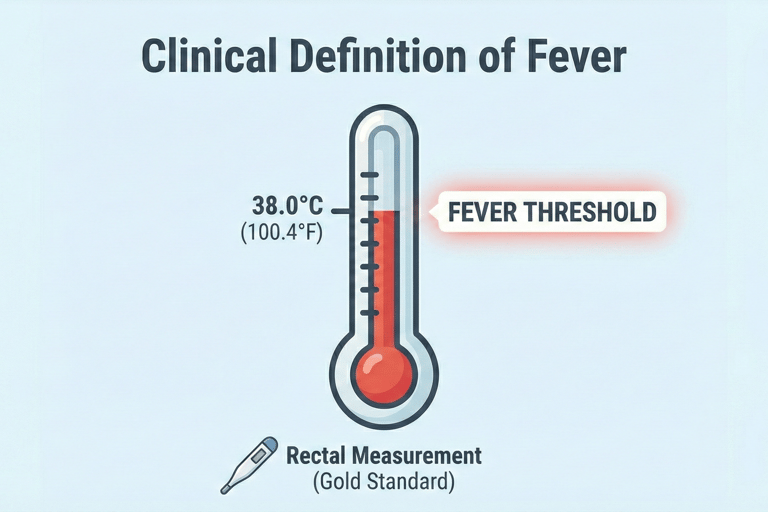
According to paediatric standards, a fever is defined as a rectal temperature of 38.0°C (100.4°F) or higher.
Note on Measurement: Axillary (armpit) temperatures are generally 0.5°C to 1°C lower than rectal temperatures. While armpit checks are convenient, a rectal measurement remains the gold standard for accuracy in infants under 3 months.
Why Does Fever Happen?
Fever is triggered when the body's internal thermostat (the hypothalamus) resets to a higher temperature to help fight invaders. The most common causes include:
Viral Infections (Most Common): The vast majority of fevers in children are caused by viruses like the flu, RSV, or common cold viruses.
Bacterial Infections: These include ear infections (Otitis Media), urinary tract infections, or throat infections (Strep throat).
Post-Vaccination: It is normal for children to have a mild fever 12–24 hours after receiving vaccines (especially DTaP or Pneumococcal shots).
Common Myth:
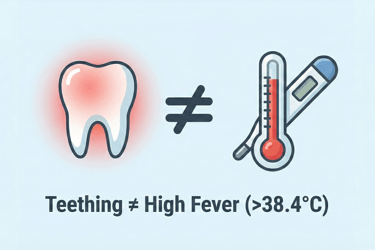
Teething- Many parents attribute high fever to teething. However, clinical studies show that while teething may cause irritability and a very mild rise in temperature, it does not cause high-grade fevers (over 38.4°C or 101°F). If your child has a high fever, do not assume it is "just teething"—look for other signs of infection.
Red Flags: When to See a Doctor Immediately
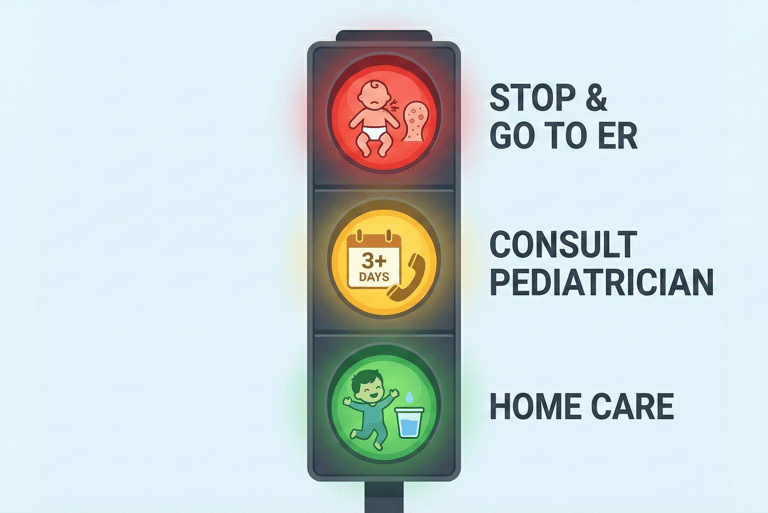
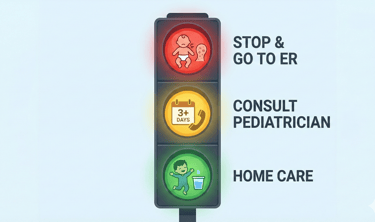
While most fevers can be managed at home, specific "Red Flags" require immediate medical evaluation:
Age under 3 months: Any temperature ≥ 100.4°F (38°C) in a baby under 3 months is a medical emergency. Do not give medication; go to the hospital immediately.
Lethargy or Toxicity: If the child is drowsy, hard to wake, has a weak cry, or is not interacting (even when the fever drops).
Dehydration: No urine output for 8+ hours, dry lips, or no tears when crying.
Specific Symptoms: Stiff neck, sensitivity to light, difficulty breathing, or a non-blanching rash (a rash that doesn't fade when pressed).
Home Management: The Do's and Don'ts
DO Focus on Hydration: The metabolic rate increases during fever, causing fluid loss. Offer small, frequent sips of oral rehydration solution (ORS), water, or breastmilk.
DO Use Medication for Comfort:
Paracetamol (Acetaminophen): Safe for all ages.
Ibuprofen: Only for children older than 6 months.
Note on Dosing: Doses are strictly based on the child's weight, not just their age.DON'T Use Aspirin: Aspirin is linked to Reye syndrome (a serious condition affecting the liver and brain) and should strictly be avoided in children and adolescents.
DON'T Use Ice Baths: Cold water or alcohol rubs cause shivering, which actually raises the body temperature. Use lukewarm (tepid) water sponging only if necessary.
When to Consult Your Paediatrician ?
Even if there are no "Red Flags," you should consult your doctor if:
The fever lasts longer than 3 to 5 days.
The fever rises above 40°C (104°F) repeatedly.
You are unsure about the correct medication dosage for your child's weight.
Your parental instinct says something is wrong—you know your child best.
Conclusion
A fever is your child's body doing its job. Watch the child, not just the thermometer. If your child is drinking well, playing, and alert, the exact number on the thermometer matters less than their overall comfort.
⚠️ Medical Disclaimer The content on Paediaxis.in is for informational and educational purposes only and does not constitute professional medical advice, diagnosis, or treatment. Always seek the advice of your physician or other qualified health provider with any questions you may have regarding a medical condition. Never disregard professional medical advice or delay in seeking it because of something you have read on this website.
Paediaxis
Privacy Policy
Terms of Use
Cookie Policy

